ICE AGE
Lines in soft clay
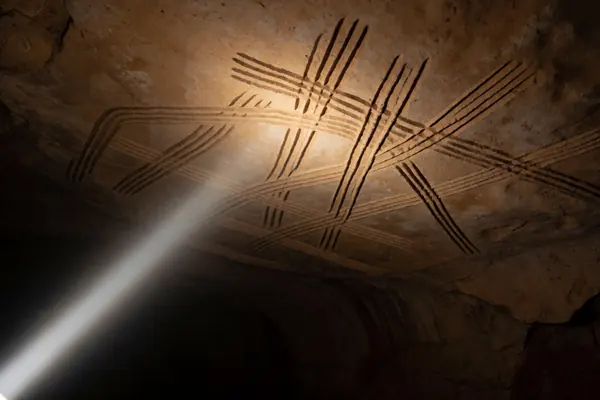
Finger flutings are lines made by running fingers over soft cave walls and roofs. At Rouffignac they are almost all made without pigment.
See the numbers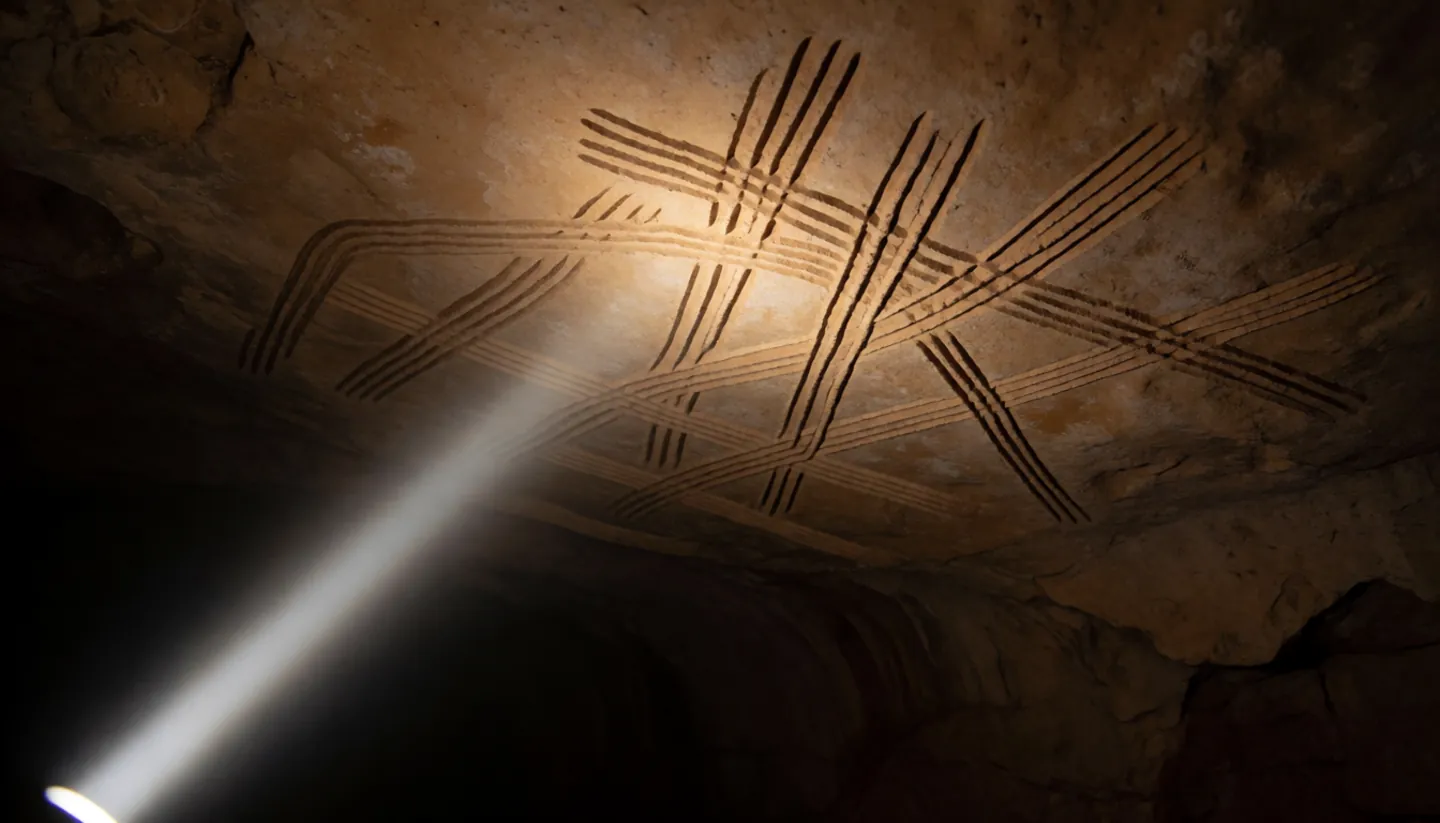
 iphonedoodle
A SHORT HISTORY
13,000 years of finger lines
Long before brushes, people drew with their hands.
In the Rouffignac caves in France, fingers dragged through soft clay left thousands of lines around 13,000 years ago. Some were made by children as young as three.
Updated
Pick a traditionTHE SHORT ANSWER
Three traditions, thousands of years apart,
all using the hand itself as the tool.
ICE AGE
Finger flutings are lines made by running fingers over soft cave walls and roofs. At Rouffignac they are almost all made without pigment.
See the numbersQING CHINA
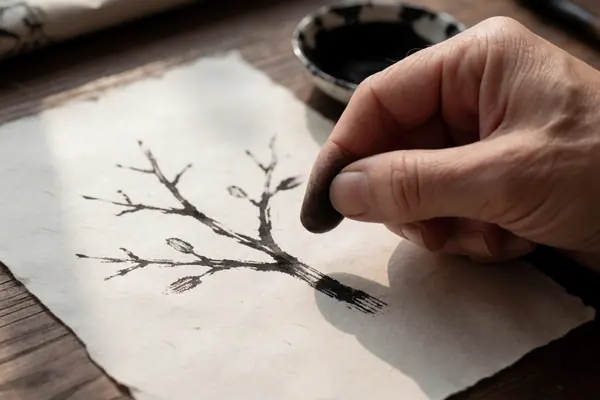
The painter Gao Qipei (1660 to 1734) made whole albums of finger paintings in ink and colour on paper, now held in museum collections.
Compare the traditionsCLASSROOM
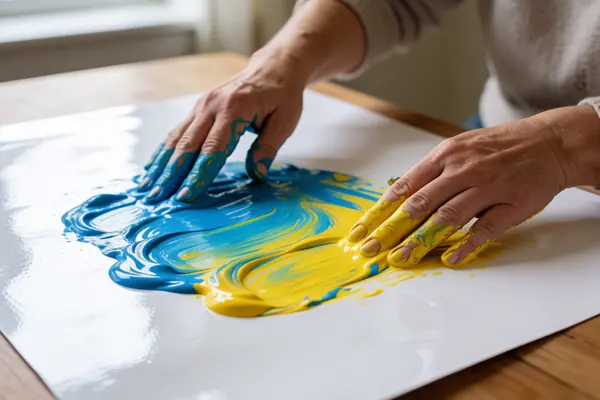
Teacher Ruth Faison Shaw devised a finger paint formula while running a school in Rome, and taught the method in New York from 1932.
Look closerTHREE TRADITIONS
Pick a finger-drawing tradition to see roughly when it dates from. The bar shows how far back in time it sits.
Dates are taken from the University of Cambridge, the Nelson-Atkins Museum of Art and the Dictionary of North Carolina Biography. They are approximate where the sources say so.
TWO NUMBERS WORTH KNOWING
One figure on how old the lines are,
one on who was making them.
≈ 13,000 years
Likely age of the Rouffignac flutings
The images deep inside the Rouffignac caves are impossible to date accurately but are likely to be at least 13,000 years old, made by hunter-gatherers.
AGE · UNIVERSITY OF CAMBRIDGE
3–7 years old
Ages of children identified from flutings
Researchers found marks by children aged between three and seven, and matched marks to four individual children. The most prolific was around five.
MAKERS · UNIVERSITY OF CAMBRIDGE
An earlier study in the journal Antiquity concluded that flutings on the roof of one chamber were made by children aged 2 to 5, who would have needed to be lifted up by adults to reach it.
HOW RESEARCHERS READ A FINGER LINE
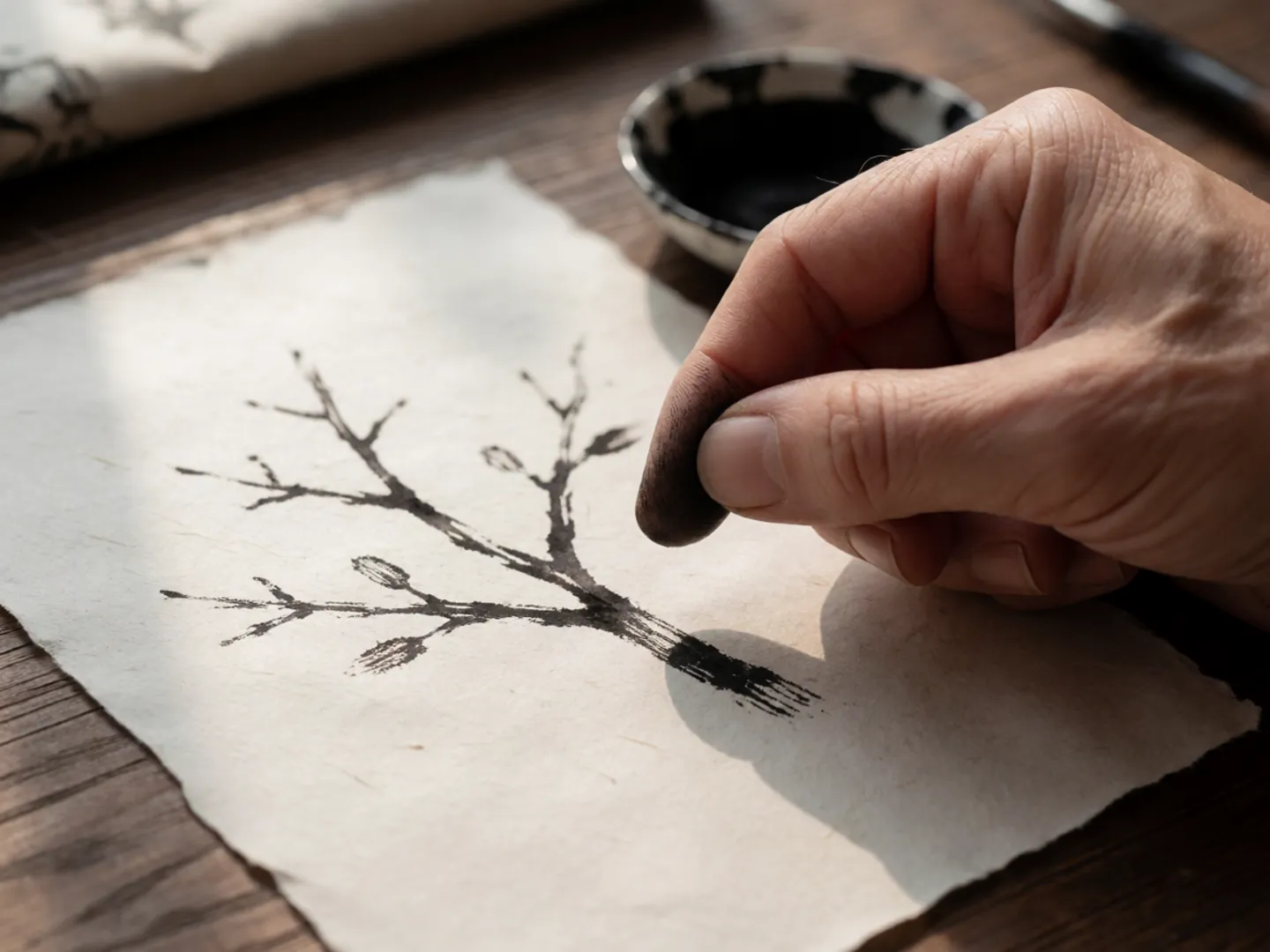
Archaeologists cannot see who made a mark, but the width and shape of the lines carry clues. This is how the Rouffignac team worked.
Researchers statistically analysed thousands of hand widths from children and adults today, focusing on the middle three fingers.
In the cave, flutings were measured with callipers and compared with that modern data set.
Where the top edges of the fingers show clearly, the team says it can tell with 80 percent accuracy whether the maker was female or male.
Repeated quirks in the marks let researchers link flutings made by the same child across the cave.
WHY DID THEY DO IT?
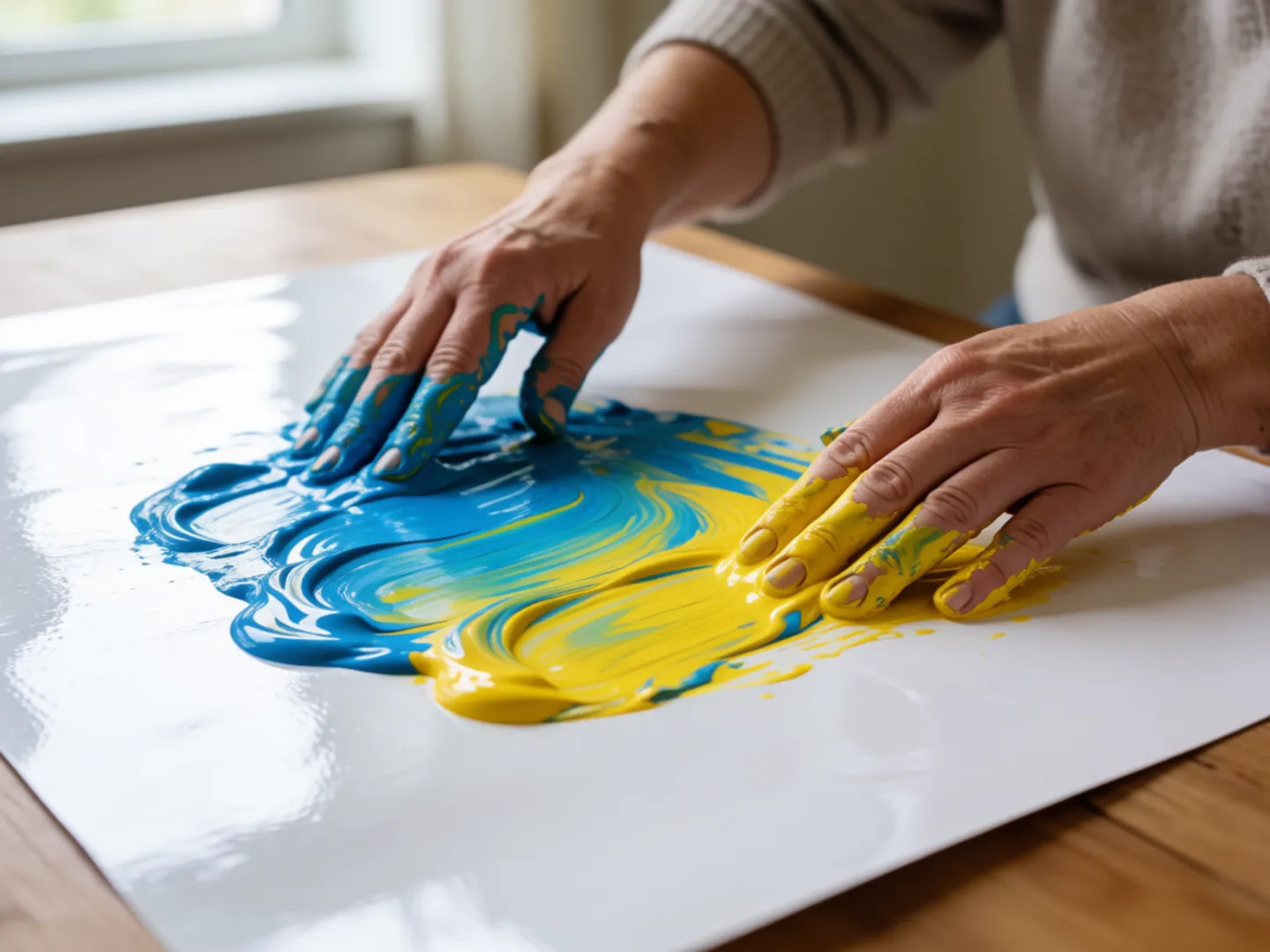
Finger flutings also appear in caves in Spain, New Guinea and Australia. At Rouffignac, children's flutings turn up in every chamber, even those about 45 minutes' walk from the entrance, and some are so high they must have been lifted up.
Researcher Jess Cooney said ideas range from initiation rituals or training to simply something to do on a rainy day. Some flutings form animals, face-like outlines and hut-like shapes called tectiforms.
Questions
A line made by running fingers over a soft surface. In caves such as Rouffignac in France, people dragged their fingers through a skin of wet clay on walls and roofs, almost always without any pigment.
Researchers compared the width of the fluted lines with thousands of modern hand measurements. Narrow sets of lines match the middle three fingers of young children, allowing ages up to about seven to be estimated.
Rouffignac is in the Dordogne region of France. Also known as the Cave of a Hundred Mammoths, it is an 8 km cave system with drawings of mammoths, rhinoceros and horses as well as thousands of finger lines.
The American teacher Ruth Faison Shaw is credited as the originator of finger painting as an art medium for children. She devised her paint formula while running a school in Rome and wrote a book about it in 1934.
No. The Qing dynasty painter Gao Qipei (1660 to 1734) made finger paintings in ink and colour, and Shaw herself gave finger painting demonstrations to servicemen in the Second World War and later worked with psychiatric patients.
Sources
ABOUT THIS NAME
iphonedoodle.com is part of the DoodleSale portfolio. It isn't in an auction right now, but you can ask about leasing it.